
Download english version Download spanish version You can attend this lecture via ZOOM from anywhere in the world (see the final two pages of this download).
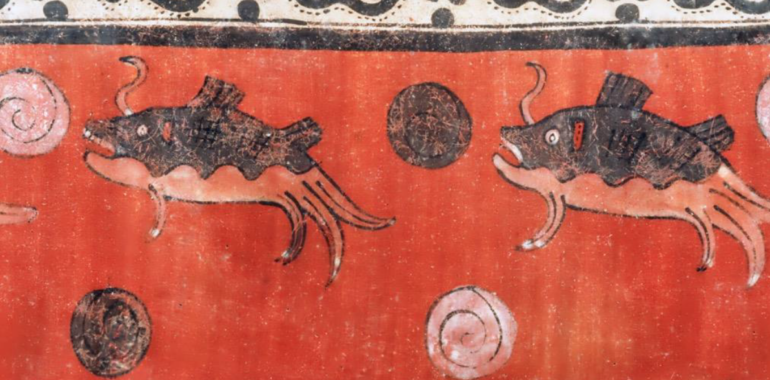
Lots of Fish in Classic Maya Art; Lots of Feline Pelage Spots
Download presentation 70 pages on Catfish Red Style (probably Tepeu 1 but I am open to an early Tepeu 2 date). Many of these Catfish Red Style scenes have the 3-black-spots which is the jaguar-pelage version of the 3-Circles Motif which is a jaguar Hix glyph without the eyelid. Since my lecture on the…

Merry Christmas 2025 and Happy New Year 2026
This is “Santa Nicholas” being pulled by native deer of Guatemala. The same species of deer that are common throughout the USA are also native and wild even in the rain forests of Guatemala. In Classic Maya art deer are often associated with monkeys—some Maya portraits of deer feature an obvious monkey tail on the…
5 news that caught our eye on 2024
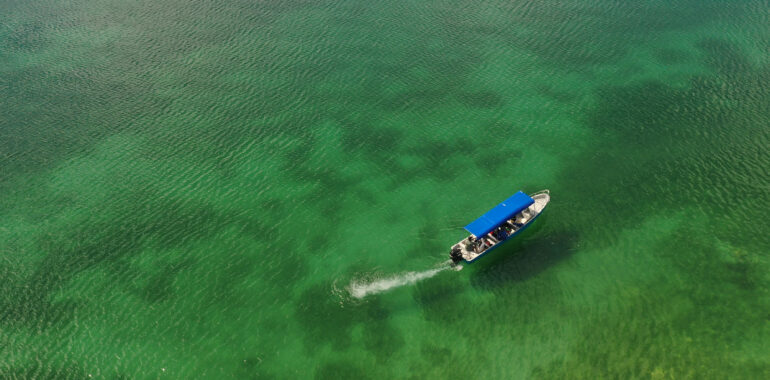
A new cycle has just started with this new year and the FLAAR Mesoamerica team put together a list of 5 events to sum up what happened last year in Guatemala, and encourage you to continue to take care of our environment and the country’s both cultural and natural diversity. Natural savannas in Laguna del…
5 Lessons from Maya Culture to Tackle the World’s Challenges
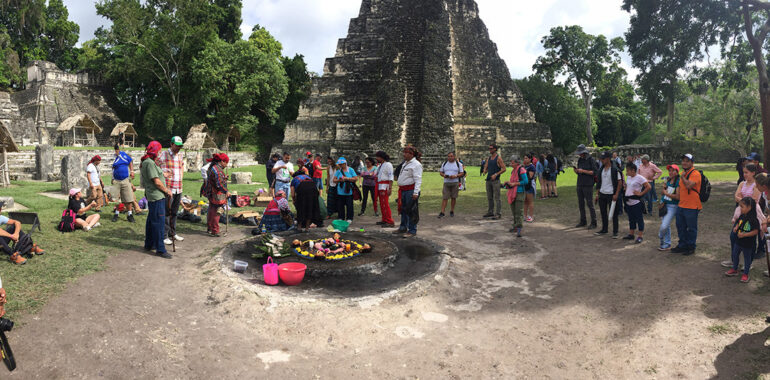
For those unfamiliar with the richness of Mayan culture, it may come as a surprise that these ancient traditions offer valuable lessons and tools essential for addressing contemporary challenges in science, peace, and development. On this World Science Day for Peace and Development, we honor the preservation of this ancient wisdom for its contributions at…
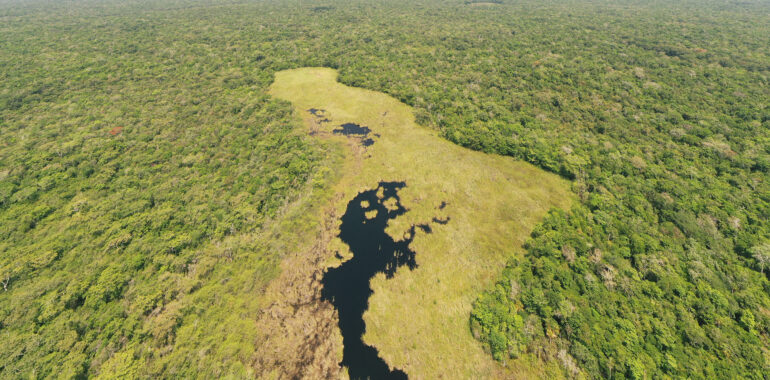
Unexplored habitats: the floodable savannas of Petén
Not every ecosystem and habitat in the world has been explored yet. In commemoration of World Habitat Day, FLAAR Mesoamérica encourages you to learn about one of the least known environments of the Maya Biosphere Reserve. The savannas of Petén may be the habitat of a number of species that still needs to be defined.…
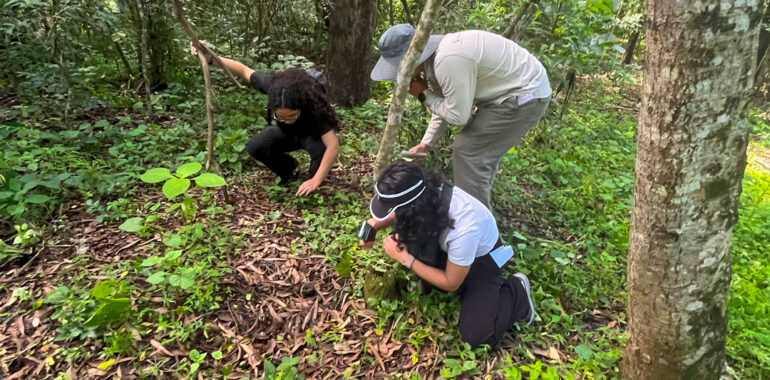
Our Second Biodiversity Workshop
For the second time in the last two years, FLAAR Mesoamérica’s research team got to deliver a workshop on biodiversity for undergraduate students of Rafael Landívar University. This time, both the team, and the students visited the Naciones Unidas National Park, and assessed small transects to measure the diversity of the park. On this note,…
The wild heart of Guatemalans: native species representative of Guatemalan identity
Due to Guatemala’s incredibly rich biodiversity, there are many species that, even when they are not national symbols, have become symbols in the identity of Guatemalans. In fact, many people born in this country grew up surrounded by these organisms since they have been deeply ingrained in the local traditions. While you learn about them…
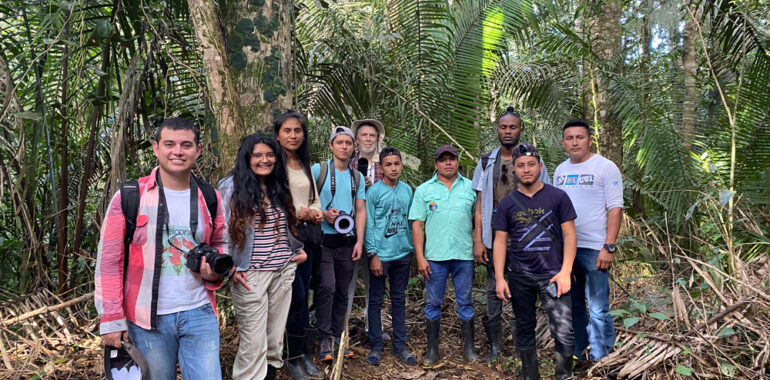
To Care for Nature, as Indigenous Communities Do
This may not be the usual FLAAR blog filled with many facts about nature or science. In fact, it may blur the line of the organization’s focus. However, it will hopefully link with its main topic: the relationship between indigenous communities and biodiversity. As you will be able to read in the following paragraphs, Indigenous…
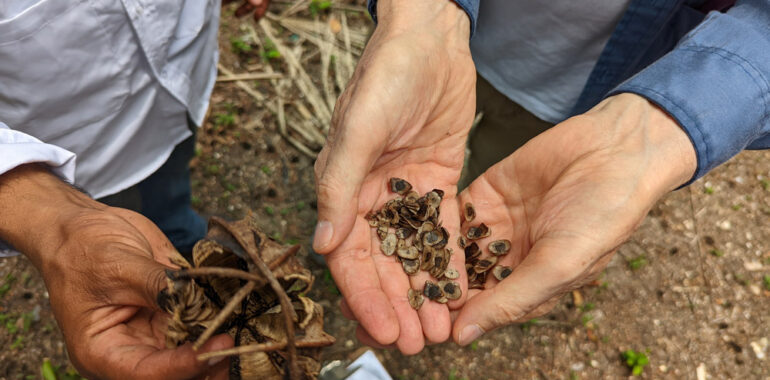
From finding prehistoric fish to locating wild vanilla flowers: the valuable support of park rangers
Park rangers are specialists in nature. Their knowledge and experience are unparalleled from any other people due to the time they stay in wild places. To acknowledge their labor and honor World Ranger Day, next follow some of the lessons and adventures they have shared with FLAAR Mesoamérica’s expeditions team. Most park rangers in Guatemala…